Going Home Kit
Going Home Kit
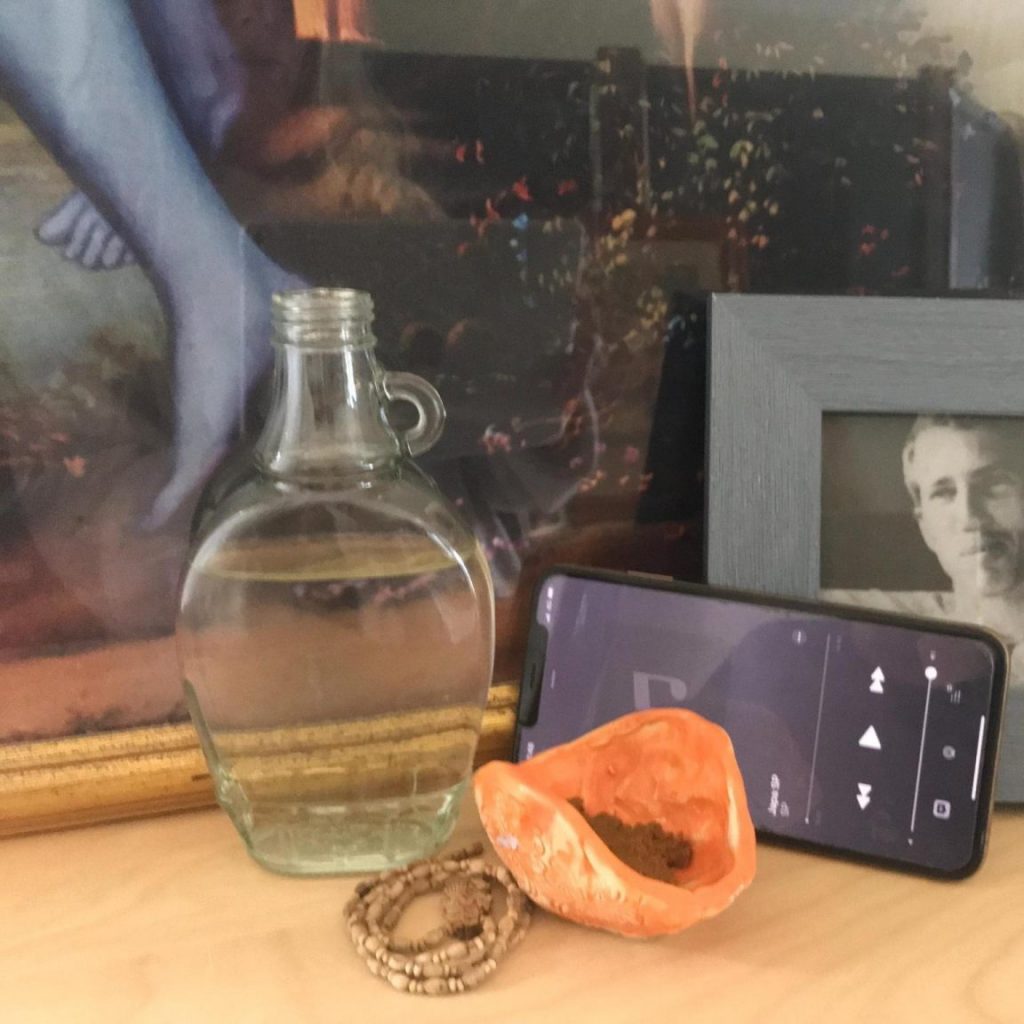
Last Updated from original May 10th 2024
A Going Home Kit consists of various items that can help you or someone you are caring for remember and rest in their eternal loving relationship with Krishna and gurudeva when the time comes to leave the body.
We never know when that time will be, so the goal is to always have a Going Home Kit ready and available for your personal use, or for anyone in your area who may need it. A going-home kit includes the following essential items:
- Music player loaded with one melody/one mantra (the Maha mantra) chanted by our spiritual master.
- Pictures of Krishna and of our spiritual master
- Japa beads
As well as the following beneficial items:
- Tulsi neck beads
- Tilak
- Maha water
- Maha cloth
- Scriptures/Krishna’s pastimes to read
- Music player loaded with one or more tracks of our spiritual master chanting alone (ideally the Mahamantra) and not with a call and response kirtan.
- Playing the chanting of our spiritual master 24/7 is the most important of all. Hearing is the last active sense before the person leaves the body. (Note: Of course, if you do not have any music player, you can chant to the person leaving the body.)
- Very important: ensure friends/family know which chanting track(s) you want to listen to when you’re leaving your body.
- Have a music device with REPEAT PLAY OPTION and preferably BUILT-IN SPEAKERS.
- Music device option examples: MP3 player, a cell phone you no longer use that has our spiritual master’s chanting tracks on it (make sure it’s not in service so there are no distractions or interruptions). (Here are two good MP3 players you can buy from Amazon. If Amazon is not available in your country, we suggest you check out what the best local website or store is to buy a good MP3 player, CD player, etc.) Must-haves with the music player: charger, extra-long charger cord and extension cord (in case plugs are located far from source), extra batteries for battery-operated players.
- Make sure the device is plugged into a reliable power source. If necessary, tape it onto the bed so it cannot be easily removed with a note “PLEASE DO NOT TURN OFF.”
- Load this device with several favorite continuous looped chants of our spiritual master, i.e. Night Chant, Samadhi Chant, SP Chanting Japa, Rasa Lila’s Samadhi Chant, Madana-Mohana Murari. You can download these tracks from this link:
https://goinghomeinfo.sharepoint.com/:f:/g/EpCNLtkR8LFEteAXFzXP4ikBUGhcPYgP0-NmslemdvOE7Q
[Note: Again, we should all make sure our chosen “Going Home” chanting track(s) is known to our family and friends. This is very important.]
- You can also find chanting on the SIF YouTube channel: https://www.youtube.com/c/ScienceofIdentityFoundation.
- A Christian playlist is available for friends or family who would appreciate resting in this:
https://goinghomeinfo.sharepoint.com/:f:/g/EmQl-WWyDq5CsoPRyRMvj1ABDPUz5rwBalxxLbwDVjlXhA
We hope to have devotional music of a variety of faiths to help as many people as possible leave their bodies remembering our sweet Lord.
- Pictures of Krishna and our spiritual master (Note: We highly recommend you get these pictures printed out asap.)
- Krishna picture/poster should be very large. We recommend the picture be at least 3 feet tall, but even larger is better. The larger the size of the pictures, the easier it is for the person(s) leaving to see and relate to Krishna and our spiritual master.
- Our spiritual master explained that the picture of Krishna person uses when leaving their body is ideally the picture that the devotee has worshipped and cultivated a loving relationship with during his/her devotional life. Choose your favorite picture of Krishna that you have the deepest connection with and most relate to, for use when it is time for you to leave the body. Whether or not you are helping your loved ones with their going home kits, ask your loved ones now what their favorite picture is and tell them what yours is. Have the pictures of Krishna and our spiritual master printed in advance.
- If you are the caregiver of someone leaving his/her body, put the pictures of Krishna and our spiritual master where the person can easily see them upon opening his/her eyes. For example, even when unable to move or lying on one’s side, the picture should be where one can see it upon opening his/her eyes.
- Make duplicates of the selected pictures of Krishna and our spiritual master so you do not have to keep moving the pictures around. They can be posted in different locations around the room, so the person leaving can see the pictures from any position.
- We recommend you use wrapped canvas prints which are light and easy to move and hang. Having an easel, and having the pictures printed on tapestries that can be made very large and are easy to store and transport, allow
scare providers to move the pictures as needed for easier viewing.
- Japa beads (Note: Some initiated disciples’ japa beads aren’t made of Tulsi)
- Please have japa beads in the “Going Home” kit. Neck beads can go around the neck or wrist, as appropriate. Make sure the beads are smooth because you do not want to add any more discomfort to the person leaving the body, like rough japa beads.
- Japa beads can be placed in the person’s hand if he/she can still do japa. If the person is unconscious or very weak yet still able to do japa but drops the beads often, wrap the beads loosely around the wrist so the beads don’t fall yet will be there when the person is able to chant on it.
- If a person is in a hospital setting, the nurses must be given instructions to strictly keep the japa beads with or on the person at all times, not to take them off when changing clothes or sheets.
- Tulsi beads – neck/wrist beads
- “Persons who decorate their bodies with Tilak or Gopi Chandan, and who mark their bodies all over with the names of the Lord, and on whose necks and breasts there are tulasi beads, are never approached by the Yamadutas.” ~Nectar of Devotion Chapter 9, Page 74* (Full quote attached below)
- Please have neck beads in the “Going Home” kit. Neck beads can go around the neck or wrist, as appropriate. Make sure the beads are smooth because you do not want to add any more discomfort to the person leaving the body, like rough neck beads.
- Japa beads can be placed in the person’s hand if he/she can still do japa. If the person is unconscious or very weak yet still able to do japa but drops the beads often, wrap the beads loosely around the wrist so the beads don’t fall yet will be there when the person is able to chant on it.
- If a person is in the hospital , the nurses must be given instructions to strictly keep the tulsi beads with or on the person at all times, not to take them off when changing clothes or sheets.
Note: If you need Tulsi beads, you can order it from Samadhi 108: https://samadhi108.com/search?q=japa+beads&options%5Bprefix%5D=last
they also sell neck beads: https://samadhi108.com/search?q=neck+beads&options%5Bprefix%5D=last
- Tilak (for the carers as well as for the person leaving) (Note: If you don’t have any Tilak available, you can also buy it from Samadhi 108: https://samadhi108.com/products/tilak?_pos=1&_sid=7e0963603&_ss=r or, check Indian stores near you which generally carry Tilak.)
- “One should decorate the body with Tilak which is the sign of a Vaishnava. The idea is as soon as a person sees these marks on the body of a Vaishnava, he immediately remembers Krishna.” ~Nectar of Devotion, Page 54
- Our spiritual master previously gave the instruction that people caring for a devotee who is leaving their body to wear tilak. So, when the devotees look at their carers wearing Tilak, the devotee will be reminded of Krishna.
- Tilak on the forehead is recommended but optional depending on circumstances. In cases where it may not be acceptable to relatives or friends of the person leaving his/her body, an option would be to trace tilak markings with Maha water without putting clay on the body, so the Tilak is there invisibly.
- Tilak, or Vishnu Tilak is marked mainly on the forehead, although other places on the body may also be marked with tilak.
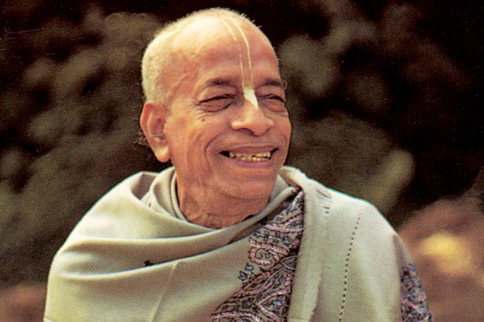
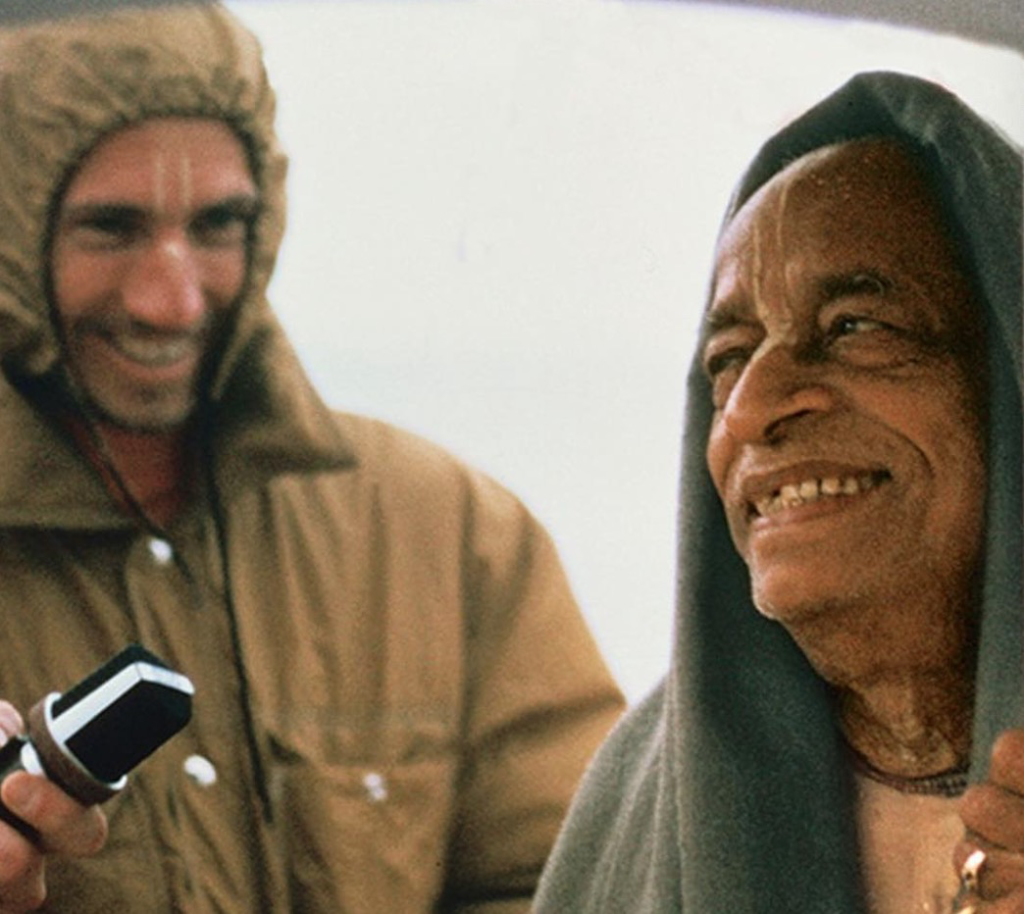
- For the forehead, moisten (index or middle) fingertip with tilak clay. Place clay-moistened finger between the eyes, press then draw finger up the midline of the forehead to the hairline. The middle part of the finger should have little or no clay as it pushes the clay to both sides of the finger to create what looks like a capital U, then right below the “capital U” dab some clay on the top of the nose bridge as can be seen in the picture below. This is a Vishnu tilak which symbolizes a Tulasi leaf being offered at the feet of Krishna or at the feet of Lord Vishnu.
“This is called a Vishnu tilak. It’s the Name of Krishna and you’re placing a Tulasi leaf there, where the Tulasi leaf belongs.” ~ Siddhaswarupananda Paramahamsa (1991 06 23 Who is Krishna; Offering Tulasi to Vishnu Tattva, M056A3-B) See images below with examples of Tilak
- (Optional but recommended) Maha water (Note: If you don’t have Maha water from SP, make a really nice offering of water to Krishna and set some aside so you have some Maha water, or approach those who care nicely for Nitai Gaur deities for offered water and possibly cloth from their deities)
- Maha water in a small spray or dropper bottle.
- Maha water is so powerful, having it on any part of the body will benefit the person. If the person leaving can take water, place some drops of Maha water in his/her mouth. Maha water can also be rubbed on the forehead.
- (Optional but recommended) Maha cloth (Note: If you don’t have Maha cloth from SP, again, make a nice offering of cloth to Krishna and use that for your going home kit. Also, also ask the devotees in your area who can share with you their Maha cloth from SP. You can work out a system of sharing the Maha cloth when needed.)
- Maha cloth and clothing if available.
- Maha cloth and clothing have powerful transcendental potency. The spiritual master’s shoes or socks are no different from his feet. Maha cloth or clothing can be placed on a person’s head, as if they are offering their obeisances to your spiritual master. The person leaving and/or the people involved in caring for the person leaving can choose where to place the Maha cloth. Usually, people like to put the Maha cloth over their heads/eyes, but if the cloth needs to be less noticeable (for example, because there are non-chanting relatives around), then place it over the heart or abdominal region.
- If you are in a hospice/hospital situation, or have non-chanting family/friends around, a note on the Maha cloth or clothing saying “‘DO NOT REMOVE” is helpful for the nurses/other individuals.
- (Optional) Krishna pastimes/scriptures - Have the departing person's favorite stories on hand. If you are preparing the “Going Home Kit” for yourself, list down the pastimes you would like to hear (if any). If you are caring for someone or are helping a loved one, help them put together their Advanced Care Plan by finding out from that person, or from family and friends, which pastimes or parts of scripture the person likes to hear the most.
- (Optional) Essential oils - Favorite scents may soothe and calm an individual. They should be soothing and subtle, like lavender, chamomile, sandalwood, rose, etc., depending on the person’s preferences, setting and circumstances. VERY IMPORTANT: oils must be offered to Krishna, must be pure and natural (not synthetic). A few drops of oil can be mixed in (some Maha) water in a small mist spray bottle or in an aromatherapy diffuser.
Summing Up
Helping other spirit souls leave their body in a way that helps them rest in and remember Krishna on their journey home is one of the greatest services we can perform. It is very pleasing to our gurudev to be helping others in this way.
The best way to assist the person leaving the body is to provide a peaceful atmosphere free of distractions. This makes it easier for the person to rest in SP’s chanting of the Holy Names and take it into his/her ears and heart. The departing person must be able to easily see the form of Krishna and the spiritual master and find rest there. When possible, bathe the person in Maha water and place tulsi beads and tilak on him/her. These are all extremely beneficial.
For help or questions on anything in this document, please reach out to the Going Home team at: info@goinghome.info
* TILAKA AND TULASĪ BEADS
The Padma Purāṇa describes how a Vaiṣṇava should decorate his body with tilaka and beads: “Persons who put tulasī beads on the neck, who mark twelve places of their bodies as Viṣṇu temples with Viṣṇu’s symbolic representations [the four items held in the four hands of Lord Viṣṇu – conch, mace, disc and lotus], and who have viṣṇu-tilaka on their foreheads, are to be understood as the devotees of Lord Viṣṇu in this world. Their presence makes the world purified, and anywhere they remain, they make that place as good as Vaikuṇṭha.”
A similar statement is in the Skanda Purāṇa: “Persons who are decorated with tilaka or gopī-candana [a kind of clay resembling fuller’s earth that is produced in certain quarters of Vṛndāvana], and who mark their bodies all over with the holy names of the Lord, and on whose necks and breasts there are tulasī beads, are never approached by the Yama-dūtas.” The Yama-dūtas are the constables of King Yama (the lord of death), who punishes all sinful men. Vaiṣṇavas are never called for by such constables of Yamarāja. In the Śrīmad-Bhāgavatam, in the narration of Ajāmila’s deliverance, it is said that Yamarāja gave clear instructions to his assistants not to approach the Vaiṣṇavas, who are beyond the jurisdiction of Yamarāja’s activities.
The Padma Purāṇa also mentions: “A person whose body is decorated with the pulp of sandalwood with paintings of the holy name of the Lord is delivered from all sinful reactions, and after his death he goes directly to Kṛṣṇaloka to live in association with the Supreme Personality of Godhead.” ~ Nectar of Devotion Chapter 9